Showing posts with label books. Show all posts

Sunday, September 06, 2026

25th Annual SF Zine Fest

The 25th Annual San Francisco Zine Fest on Sunday afternoon was a blast from the past in more ways than one.
First of all, it was being held at the 1892 Hibernia Bank building at Jones and McAllister...
...which was recently renovated as an event space after sitting vacant for decades.
Secondly, the free admission event was requiring all vendors and attendees to wear masks...
...which engendered immediate PTSD in those who were transported back to the bad old days of COVID's onset in 2020.
Security at the door, who were handing out snug black masks, explained that it was for the benefit of vendors who lived with disabilities and immunosuppression, but it felt strange and uncomfortable.
Though zine culture seems like vintage pre-internet, its current creators represent a physical corrective to our increasingly corporate, digital world.
In a side room I stumbled across one of the serious legends of alternative culture, V. Vale. I had no idea who the gentleman was until returning home and reading his bio at the RE/SEARCH website: "Possibly the ONLY surviving 70s punk publisher who never quit, V. Vale’s RE/Search continues to provide ‘Against-the-Status-Quo’ publications that stimulate the imagination and optimistic skepticism. Vale has been doing counterculture publishing since 1977, when he founded the Punk tabloid, Search & Destroy, San Francisco’s first. It was published at City Lights Bookstore, where V. Vale worked, and was funded by $100 each from Lawrence Ferlinghetti and Allen Ginsberg. Then in 1980, V. Vale launched RE/SEARCH, which is best known for its impact on the total world of underground culture."
Also attending was another legendary publisher, Larry-Bob Roberts, who started the Holy Titclamps queer punk zine in Minnesota in 1989 and continued publishing it in San Francisco until 2003.

Sunday, May 15, 2022

John Waters Book Signing

Filmmaker, writer, and performance artist John Waters is the Oscar Wilde of my generation. His subversive wit over the course of fifty years of filmmaking, essay writing, and speaking is unparalleled and he shows no signs of slowing down at age 76.
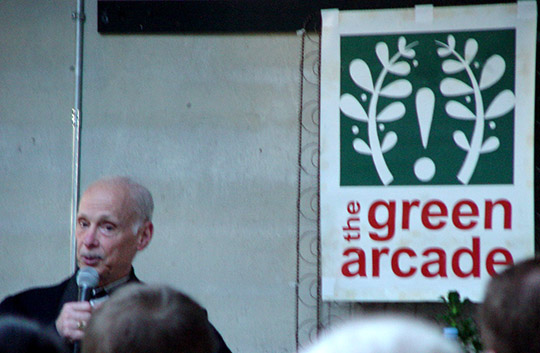
Though Waters has written over a dozen books that are mostly collected essays, three years ago he decided to write his first novel, Liarmouth, which was just published, and he's embarking on a worldwide tour to promote it. Last Monday, the Green Arcade bookstore on Market Street arranged for a book signing and an interview with audience Q&A at the McRoskey Mattress Factory across the street.
Waters was his usual thoughtful and brilliantly funny self without ever falling into repetitive schtick. I remember an interview in an obscure gay rag in the 1970s where he was asked for his favorite joke, and I have been repeating his answer like a mantra for decades. Waters said, "I hate jokes. Whenever somebody tells me one, I immediately reevaluate that relationship." During the audience Q&A session last Monday, I reminded him that he was on a talk show in 2016 where the interviewer asked him, "What was the last thing that shocked you?" and his quick reply was, "Donald Trump being elected President." He remembered the moment and exclaimed, "Oh, gawd, the Trumps. They ruined Bad Taste."
He continued, "Have any of you seen pictures of Barron Trump these days? He's turned into a literal giant. When you see pictures of him with his parents, it looks like that Diane Arbus photo [Jewish Giant with His Parents in the Bronx]."
The line for Liarmouth to be signed with a personal inscription from Waters snaked all the way through the third floor of the warehouse.
Besides all his other projects, Waters started an East Coast Summer Camp six years ago, with cameos by stars of his films like Kathleen Turner, Patty Hearst, and Traci Lords. The three women above had attended the last Camp and were members of the Pussywillows Gang.
This year's fifth interation is taking place in Connecticut, hosted by Debbie Harry, and is already sold out.
Monday was my first wedding anniversary with Austin, who invited Waters to a Halloween party in Baltimore back in the 1990s, and he even showed up. So I asked Waters to write, "Happy Anniversary Buttfuckers Austin + Mike -- John Waters." Now that's a gay wedding anniversary present to remember.

Sunday, November 21, 2021

Inferno in the Castro

The Italian Cultural Institute of San Francisco celebrated the 700th anniversary of Dante's death with a free screening of a famous 1911 silent film, L'Inferno at the Castro Theater.
This was the Institute's first live event since the pandemic began, and it was a pleasure hearing half the large audience chattering with each other in Italian, a language which sounds to me like everyone is singing.
A speaker from the Institute explained that we were seeing a newly restored print from Cineteca di Bologna of the first Italian feature film and the oldest silent feature that still exists. The title cards were in Italian so an onstage translator read them to us in Italian and quickly translated English in between the live music accompaniment by the Sascha Jacobsen Quintet.
I recently read Dante's The Divine Comedy for the first time, slowly, over the course of a year, and it proved to be as extraordinary as its reputation, especially in the Dorothy Sayers translation with its witty, informative notes. The first book in the trilogy is a journey by Dante and the Roman poet Virgil through Hell, which is pictured to be in the center of the earth. The second details a climbing expedition up Mount Purgatory, while the third zooms to the planets and outer space for Paradise. The mixture of allusions to classical mythology, Christian history, and contemporary events and personages is astonishing, combining all Western knowledge across time.
I have wanted to see this film since reading The City of Palaces, Michael Nava's magnificent 2014 novel set during the Mexican Revolution. One of its major characters is a sensitive, artistic boy who sneaks into a a back room where they are projecting L'Inferno which induces nightmares through the rest of his childhood.
The character is also disturbingly, erotically excited by the sight of hundreds of naked sinners, most of them wearing a thin loincloth over their genitals. In truth, I have never seen so much pubic hair in a film in my life.
The 70-minute movie is filled with wild special effects and the new print really is beautiful. If you'd like to check it out, click here for the full movie on YouTube.
The musical accompaniment by the Sascha Jacobsen Quintet (Javier Santiago, piano; Michele Walter, violin; Andy Lewis, percussion; Sheldon Brown, clarinet, and Sascha Jacobsen, bass, composer) was delightful, lively and adept at weaving in and out of the onstage narration. The only criticism is that it didn't match up in mood with the film, being a bit too jaunty while the images were unceasingly horrific until Dante and Virgil finally escaped Hell. "E quindi uscimmo a riveder le stelle. (And thence we came forth to see, once again, the stars.)"

Monday, August 28, 2017

Daniel Nicoletta Book Signing Party

Daniel Nicoletta, who started his photography career as a teenage assistant in the 1970s at Harvey Milk's camera shop in the Castro, has just had his first collection of photos, LGBT San Francisco, published by Real Art Press in London.

An entertaining book signing party was held last Thursday in The Green Room in the Veterans Building on Van Ness, and it attracted a wide range of survivors from the 1970s who have not yet moved to Palm Springs, along with a sprinkling of young pups.

One of the more amusing moments was watching the gentleman above leafing through the book, and exclaiming, "That's me!" eight different times.

The 304-page, oversized coffee table book has been beautifully crafted, so we congratulated the gent above who was involved in scanning the photos for reproduction.

Local artistic fixtures were everywhere, including Russell Blackwood of the late, lamented Thrillpeddlers at the Hypnodrome talking to journalist and costumer John F. Karr.

The ubiquitous drag queen Donna Sachet held court on the balcony...

...while being watched by Tony and Leandro.

Michael Lee from Minneapolis (above left, with Rex the Nob Hill Gentleman) was in an ecstatic mood because he is currently writing a biography of the late gay writer, Randy Shilts, and was surrounded by his subject's milieu.

Nicoletta moved to rural Oregon about five years ago, but his book is an instant time machine to San Francisco's Radical Sex Culture from the 1970s to the present. Pictured above is fellow photographer Rink who has been covering much the same ground for decades. Though Rink's work is more Weegee than Avedon, his treasure trove of historical photos would also make for a fascinating book.

Sunday, April 09, 2017

History Will Be Our Judge

Yet another reason to love City Lights Bookstore is the homemade signage that appeared in January on the windows of the second floor poetry room facing Columbus Avenue.

"ALL BULLIES ARE COWARDS," one sign reads. "THEIR WEAKNESS IS OUR STRENGTH" reads another.

City Lights Booksellers and Publishers was opened by the poet Lawrence Ferlinghetti in 1953, and both the store and the poet are still going strong.

It is one of my four holiest places in San Francisco, with Lincoln Park Muncipal Golf Course, the SF Opera House, and the Bay ferryboats rounding out the quartet.

Thursday, January 12, 2017

"Lay Your Sleeping Head" by Michael Nava


The writer Michael Nava was interviewed and gave a reading from his newly published novel, Lay Your Sleeping Head, last Saturday at the Hormel Center in the Main Branch of the SF Public Library. The turnout comfortably filled the room, amusing questions from writer Kevin Killian were thoughtfully answered, and books were sold.


In a fascinating, autobiographical afterword to the novel, Nava explains the book's genesis. His first mystery novel, The Little Death, was published in 1986 by a young, gay Bostonian, Sasha Alyson, who Nava remembers as being very odd, but also possessing unusual "vision, intelligence and determination." The novel was meant to be a one-off, but it was reviewed favorably in The New York Times and was a modest success, so he was contracted to write more featuring the same leading character, Henry Rios, a gay, Mexican-American lawyer who came from the wrong side of the tracks in California's San Joaquin Valley and managed to educate himself into a complicated relationship with the ruling class of coastal California.


The Henry Rios series continued for a total of seven volumes, ending with Rag and Bone in 2001, and then stopped altogether, partly because the author had become tired of living constantly with the same character. This was hugely disappointing for fans of the series, because the books are so good and the characters so rich. Additionally, there are very few writers that have described 20th Century California as well as Nava, or as accurately. Readers were being given insiders' looks at the gay world in all its intricacies and the Mexican-American world in its own complexities, plus convincing appearances from every race, political group and economic class. On top of it all, his California is multiple: San Francisco and its environs, the San Joaquin Valley, and Los Angeles are all shaded distinctly.


Without a trust fund background, Nava had to find a paying profession rather than poet/writer/grad student, so he became a lawyer, graduating from Stanford Law School, and had a distinguished career that ended while writing opinions at the California Supreme Court in San Francisco and working on death penalty case reviews. Long an advocate for racial diversity on the bench, he also ran for Superior Court Judge earlier this decade and almost won. Because Nava broke the unofficial, back bench rule which decrees that you must not run against a sitting judge, the election got as ugly as anything I have ever witnessed in local San Francisco politics, which is quite a statement if you are familiar with the everyday corruption of San Francisco politics. The silver lining to the electoral disaster was it spurred Nava to finally finish a novel he had been working on for 14 years about the Mexican Revolution, The City of Palaces. It is a modern classic, I believe, and worth the time it took to germinate.


Meanwhile, the Henry Rios series were being regarded as modern classics of their own in the California mystery genre, and are being studied in Latin American and Gay Studies programs at colleges throughout the country. Unfortunately, they were out of print except for e-book versions, so last year Nava managed to regain the print rights to the seven novels from a conglomerate and struck up a deal with another young indie publisher, Lorenzo Herrera y Lozano. Nava read The Little Death for the first time in years, hoping to fix a few typos, and found himself appalled at how thin the book was, and how much better a writer he had become over the course of a lifetime. So he rewrote 95% of the novel, keeping the same characters and plot, but enriching it all with an understanding he didn't possess when it was first written. Going back and rewriting earlier work is more common among composers than writers, and it often doesn't work out well, but having read both The Little Death and Lay Your Sleeping Head more than once, this is one case where the improvement is enormous without sacrificing any of the youthful energy that animates the characters.

Nava pointed out to Kevin Killian above that the series has turned out to be an unofficial history of the AIDS Plague era, with Lay Your Sleeping Head taking place in 1982 at the advent and the final Rag and Bone in 2000 when the period where AIDS was an automatic early death sentence was about to come to an end. "Writing these books was like being in the midst of a battle, where friends were being killed all around you, and you just try to survive and record what is going on without really being able to think."


Nava retired from his legal career last summer and he seemed in a bit of a what-to-do-next funk when we had lunch one day. The prospect of writing anymore wasn't appealing. So the real headline news of the afternoon is that Nava has just finished the first draft of a new Henry Rios novel, set in San Francisco in 1984, becoming in effect the second book in the series, bridging the gap between the Northern California first volume and the move to Los Angeles for the rest of the series. "It's the first Henry Rios book set in San Francisco, right after he gets out of rehab and the advent of AIDS is raging in the streets. I started writing it two days after Trump was elected, and have never written anything that fast." This is the first election silver lining story I have heard.

Saturday, July 30, 2016

Make America's Beer Great Again


There was a $9.99 sale on 12-packs of Budweiser beer at a corner store recently, which I bought without realizing the cans had been rebranded as "America" for the summer. One of the multiple ironies is that Bud is now owned by the Belgian conglomerate AB InBev who were trying to capture patriotic millenials as new customers. According to an article in Business Insider, the campaign has been an abject failure. Millenials have been migrating to wine and craft beers and aren't about to drink weak, old-fashioned swill whether it's wrapped in the flag or not. In fact, during my lifetime we have gone from a country that featured about a dozen domestic beer brands to this startling statistic from Bloomberg News: "There are now more U.S. breweries than at any other point in recorded American history. According to data released today by the Brewers Association, there were 4,269 operating breweries in the country at the end of 2015, surpassing the previous record logged all the way back in 1873 when a lack of transportation and refrigeration meant breweries had to be local."


A 12-pack of America beer turned out to be the perfect accompaniment for the last two weeks of U.S. presidential party conventions which I glanced at on a DVR with my partner Tony who was transfixed by the car wreck of the Republican convention and the slick, uplifting rhetoric of the Democratic convention. My favorite speech was First Lady Michelle Obama who seemed to be channeling Scandal's Kerry Washington offering one of her frequent, inspirational Shondra Rhimes soliloquies. The most interesting commentary I have read recently is a July post by UC Berkeley linguist and cognitive scientist George Lakoff called Understanding Trump, which explains why he's winning. It's long, frightening and makes considerable sense. Here's a sample:
As the legendary Green Bay Packers coach, Vince Lombardi, said, “Winning isn’t everything. It’s the only thing.” In a world governed by personal responsibility and discipline, those who win deserve to win. Why does Donald Trump publicly insult other candidates and political leaders mercilessly? Quite simply, because he knows he can win an onstage TV insult game. In strict conservative eyes, that makes him a formidable winning candidate who deserves to be a winning candidate. Electoral competition is seen as a battle. Insults that stick are seen as victories — deserved victories. Consider Trump’s statement that John McCain is not a war hero. The reasoning: McCain got shot down. Heroes are winners. They defeat big bad guys. They don’t get shot down. People who get shot down, beaten up, and stuck in a cage are losers, not winners.


Coincidentally, I've been reading my first Octavia E. Butler novel, set in Northern California during a dystopian near-future, 2032 to be exact. Her voice is that of a black, sci-fi Cassandra, and reminds me of Doris Lessing and Margaret Atwood at their visionary best. Speaking of Atwood, her novel The Handmaid's Tale, published in 1985, is a spookily perfect envisioning of a country led by someone like Mike Pence, where abortion is murder, women are the property of men, and gays are hung by their necks at city gates for being "gender traitors."


Doing research for this post, I discovered that Parable of the Talents is actually the second in a two-volume series so I am going to return to it after reading the primary Parable of the Sower. There was a startling bit of futurist synchronicity, though, when I stumbled across the above text on my commute home yesterday. Texas Senator Andrew Steele Jarret, a right-wing, racist, fundamental Christian rabblerouser is running for president and his slogan is "Help us to make America great again." Butler published the book in 1998, and was going to write sequels but found the prospect too depressing. She died young at the age of 58 in 2006.

Friday, March 25, 2016

West Edge Bohemia


West Edge Opera presented a concert version of the other operatic version of La Bohème by Leoncavallo on Sunday at Mills College in a wonderful, strongly sung performance. Pictured above, left to right, are Ryan Bradford as Colline, Sally Mouzon as Phemie, Buffy Baggott as Musette, Michael Orlinksky as Schaunard, Alex Boyer as Marcel, Anders Froelich as Roldolphe, and Carrie Hennessey as Mimi. Not pictured but essential was Musical Director Jonathan Khuner on piano, who gave a virtuoso performance of the complex musical reduction while conducting a large vocal ensemble.


Leoncavallo was a librettist as well as a composer, and was great friends with Puccini for whom he wrote the libretto for Manon Lescaut. Leoncavallo proposed collaborating on an adaptation of the 1849 play by Henry Murger (above) and Théodore Barrière about starving artists and their girlfriends in Paris' Latin Quarter during the 1840s, which in turn was based on a series of touching, humorous, autobiographical stories by Murger published in various Parisian newspapers. Puccini professed to be uninterested but changed his mind and wrote his own opera with different librettists, basing it on the later 1851 collection of stories called Scènes de la vie de bohème which was published after the smashing success of the play.


Leoncavallo was furious and went ahead with his own opera while publicly calling out Puccini for his bad behavior. Puccini denied the story in a letter to an Italian newspaper in 1893, and concluded, "Let him compose, and I will compose. The public will judge." And judge they did, with Puccini's 1896 tuneful, sentimental opera becoming an overproduced repertory staple while Leoncavallo's 1897 opera slipped into obscurity. Based on the West Edge Opera performance, I actually prefer the Leoncavallo. Its libretto is more coherent, the humor is genuinely funny, and the characters have a harder, more realistic edge. The Bohemians are also more fleshed out than in the Puccini opera, especially the composer Schaunard, given a sly, funny performance by Michael Orklinksky above.


I tried to find an English translation of the novel at the SF Public Library, which did not exist, but did stumble across a delightful 1946 biography of Henry Murger, a Parisian janitor's son who had dreams of becoming a poet. That didn't work out so well financially, so his friends encouraged him to write prose, and he finally found a measure of success with journalistic vignettes based on real incidents from the lives of his friends. In their early 20s, they were mostly starving, aspiring artists in various disciplines, living in unheated garrets and cheap hotels in the Latin Quarter, while hanging out nightly on the second floor of the Cafe Momus which was an actual establishment.


The Leoncavallo opera starts with a scene at the Cafe Momus, where the proprietor is demanding to be paid and the artists respond by crafting a manifesto of demands themselves, such as a more extensive selection of newspapers, better coffee, and so on. The second act takes place at an apartment courtyard just as Musette is being evicted after her rich sugar daddy stops paying rent because she's been spending too much time with the painter Marcel. She was supposed to be hosting a soiree that evening, so her circle of friends decide to rearrange her furniture in the courtyard for an impromptu party instead, which culminates in a near-riot when the noisy young people wake up the older tenants. The chorus was a little ragged, but they heroically managed to convey both the revelers and the angry tenants in musical counterpoint.


In contrast to the Puccini version, where Rodolfo and Mimi are the main romantic characters, Leoncavallo's opera focuses more on Marcel and Musette. Soprano Buffy Baggott above as Musette was delightful, and Alex Boyer as Marcel, even with a couple of unsteady moments, sounded ready to take on the major operatic stages of the world with his big, beautiful tenor.


The real Musette was named Marie Roux (seated in the above photo). The book relates that she "was a neatly-balanced mixture of gentleness and heartlessness. She was thoroughly independent, quitted her lover whenever she fancied, and as capriciously rejoined him. The Lothario of the Bohemians had met his match. Once, when, as usual, she and Champfleury [the model for Marcel] had parted forever, Musette came back to stroke Champfleury's head. 'My dear, I am never jealous of my old lovers. When it is finished, it is finished. We see each other again, we are good friends, and that is all. I am not like most women and all the world knows I don't act with men as most women do. If I love someone, I tell him so."


The poet Rodolphe, sung beautifully by baritone Anders Froehlich (above left), was based on Murger himself while Mimi, given a lovely performance by Carrie Hennessey (second from the left) was a conflation of three different lovers, all of them blonde, blue-eyed, and frail. Two of them died young of tuberculosis in charity hospitals, and Murger himself died at the age of 38 from acute arthritis and gangrene, probably brought on by the serious malnutrition he experienced as a young man.

In The Legend of The Latin Quarter, there is a funny story where Murger and Barrière can't agree on an ending for their play, so they bring in a writer friend named Monselet to play referee. "Barrière, it appeared, was insistent that "Mimi must die." Henry shook his head vehemently. He proposed that she be sent on a trip to Italy, at any rate make the ending a happy one. Barrière, who knew the true story of Mimi/Lucille, was adamant. The greatness of the play, he contended, rested upon her tragic death. But for the sentimental Murger, it was harrowing to kill the poor girl a second time. The two collaborators appealed to Monselet. He agreed with Barrière. It was two against one and Henry finally withdrew his objections. "And that," chuckled Monselet afterward, "was how I killed Mimi."